Clean Label Bread Improvers and Commercial Realities for Industrial Bakeries
Clean label bread improvement is no longer a niche brief. It is a commercial requirement shaped by retailer standards, consumer scrutiny, ingredient declaration pressure, and the operational need to keep high-speed bread lines stable.
For bakery premix manufacturers, the challenge is practical: deliver recognizable-label positioning without giving up dough tolerance, loaf volume, crumb softness, sliceability, and batch-to-batch repeatability. That is where enzyme-based bread improver systems earn attention. They can help replace or reduce certain conventional additives, but only when they are formulated around flour variation, process conditions, and the realities of industrial dough handling.
DoughVector supports technical buyers and formulation teams evaluating bulk bakery enzymes for premix manufacturers, with a focus on premix stability, plant usability, and measurable baking outcomes.
What clean label really means in bread improvement
There is no single global definition of clean label. In commercial bakery procurement, it usually means some combination of:
- Shorter ingredient declarations
- More familiar ingredient names
- Reduced reliance on emulsifiers or synthetic-sounding additives
- Non-GMO, allergen-aware, or regional compliance expectations
- Retailer-specific restricted ingredient lists
- Consistent product quality without “chemical improver” perception
The commercial reality is that bread still has to run. Dough must tolerate mixing variation, sheeting, proofing, makeup stress, frozen or chilled distribution where relevant, and high-speed slicing. A clean-label claim that fails on the line is not a sustainable formulation strategy.
Why industrial bakeries are rethinking bread improvers
Traditional bread improvers often combine oxidizing systems, emulsifiers, reducing agents, hydrocolloids, minerals, and processing aids. These tools can be effective, but some are under pressure from label review programs.
Enzyme-enabled improvers offer a different route. They act on flour components during mixing, fermentation, baking, and early shelf life, then are typically used at very low inclusion levels in the finished premix. For premix manufacturers, this creates room to build function without adding heavy bulk or complicating customer handling.
Common formulation goals include:
- Stronger dough handling across variable flour lots
- Improved gas retention and oven spring
- Softer crumb over shelf life
- Better machinability in continuous or semi-automated lines
- Reduced dependence on certain emulsifier systems
- More consistent volume and crumb structure
- Cleaner ingredient positioning for retail bakery customers
The enzymes that matter most in clean-label bread systems
Amylases for fermentation support and crumb softness
Amylases help manage starch conversion during dough processing and baking. In practical terms, they can support yeast activity, crust color development, loaf volume, and crumb softness. For industrial bread, the key is balance. Too little function may underperform; too much can create sticky crumb, gummy slicing, or process instability.
For premix manufacturers, amylase selection should account for flour damage, sugar level, fermentation time, bake profile, and distribution shelf-life target.
Xylanases for dough tolerance and volume
Xylanases act on hemicellulose fractions in wheat flour, helping improve dough handling, extensibility, and gas retention. In many clean-label bread improver systems, xylanase is central because it can improve volume and crumb openness without relying solely on emulsifier strength.
The formulation risk is over-softening or creating dough that feels loose under mechanical stress. Screening should be done against the customer’s flour range, not a single lab flour.
Lipases for emulsifier reduction strategies
Lipases can generate functional lipid interactions in dough systems, supporting crumb structure, dough stability, and loaf volume. They are often considered where bakeries want to reduce or replace certain emulsifiers while maintaining processing performance.
This does not mean every emulsifier can be removed without consequence. A commercial formulation must compare crumb resilience, sliceability, sidewall strength, and shelf-life softness under actual line conditions.
Glucose oxidase for dough strength and handling
Glucose oxidase can contribute to dough strengthening and handling tolerance. It is useful in systems where flour protein variation or mechanical stress creates weakness. In clean-label development, it may help reduce dependence on some chemical oxidation approaches.
The practical concern is excessive tightening. Industrial dough needs strength, but also enough extensibility for makeup, proof, and oven expansion.
Proteases for controlled extensibility
Proteases can improve extensibility, reduce mixing stress, and support specific products where dough relaxation is needed. In pan bread improvers, they should be used carefully because excessive protein modification can reduce dough strength and gas retention.
For premix manufacturers, protease use should be tightly aligned with the target bread format and flour strength range.
The commercial tradeoffs clean-label projects must face
1. Label goals do not remove performance specifications
A bakery may request a cleaner label, but the purchasing team still expects consistent case yield, waste reduction, shelf-life performance, and complaint control. If a reformulated improver creates more line stoppages, the project will lose support quickly.
A useful clean-label brief should include:
- Target label changes
- Current improver benchmark
- Bread type and process map
- Flour specifications and seasonal variation
- Mixing, proofing, and baking conditions
- Volume, texture, and shelf-life targets
- Tolerance for process adjustments
- Cost-in-use expectations
2. Flour variation is the hidden cost driver
Clean-label enzyme systems are not formulated in isolation. Wheat origin, protein quality, starch damage, falling number, ash content, and milling consistency can all influence response. A premix that performs well with one flour stream may drift when the bakery changes mill, crop year, or blend ratio.
For premix suppliers, the winning formulation is usually not the most aggressive enzyme blend. It is the one with a wide operating window.
3. Premix homogeneity matters as much as ingredient choice
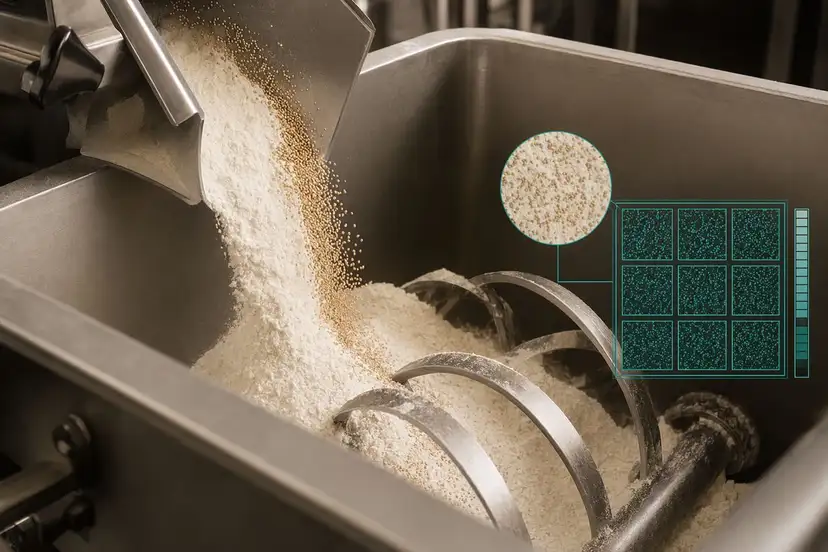
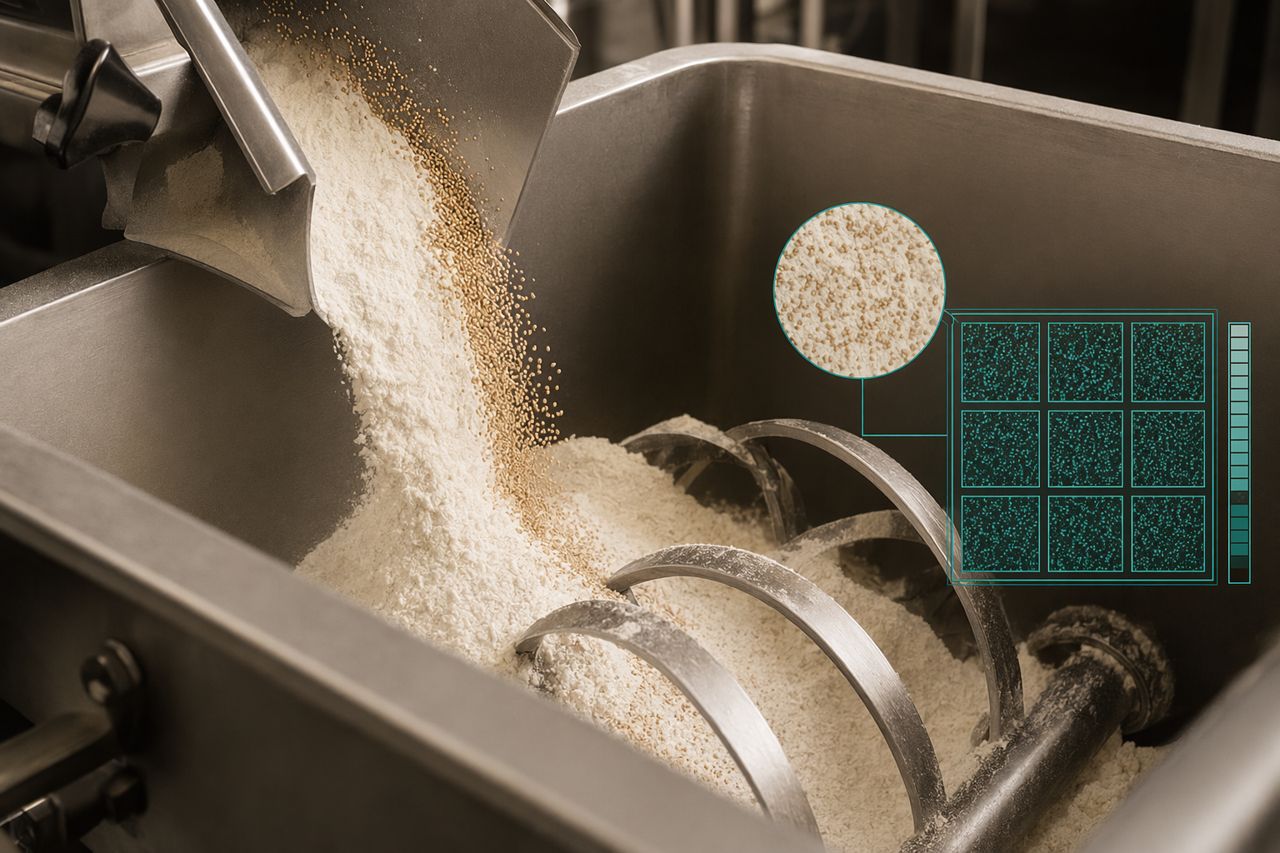
Enzymes are high-impact ingredients used at low inclusion. That makes premix design critical. Carrier selection, particle size distribution, segregation risk, dust control, and blender loading sequence all affect field performance.
A technically sound clean-label improver should be designed for:
- Uniform dispersion in flour-based premixes
- Low segregation during filling, storage, and transport
- Compatibility with minerals, oxidants, fibers, and emulsifier alternatives
- Stable performance through realistic warehouse conditions
- Easy dosing at the customer’s plant
4. Cost-in-use beats cost-per-kilogram
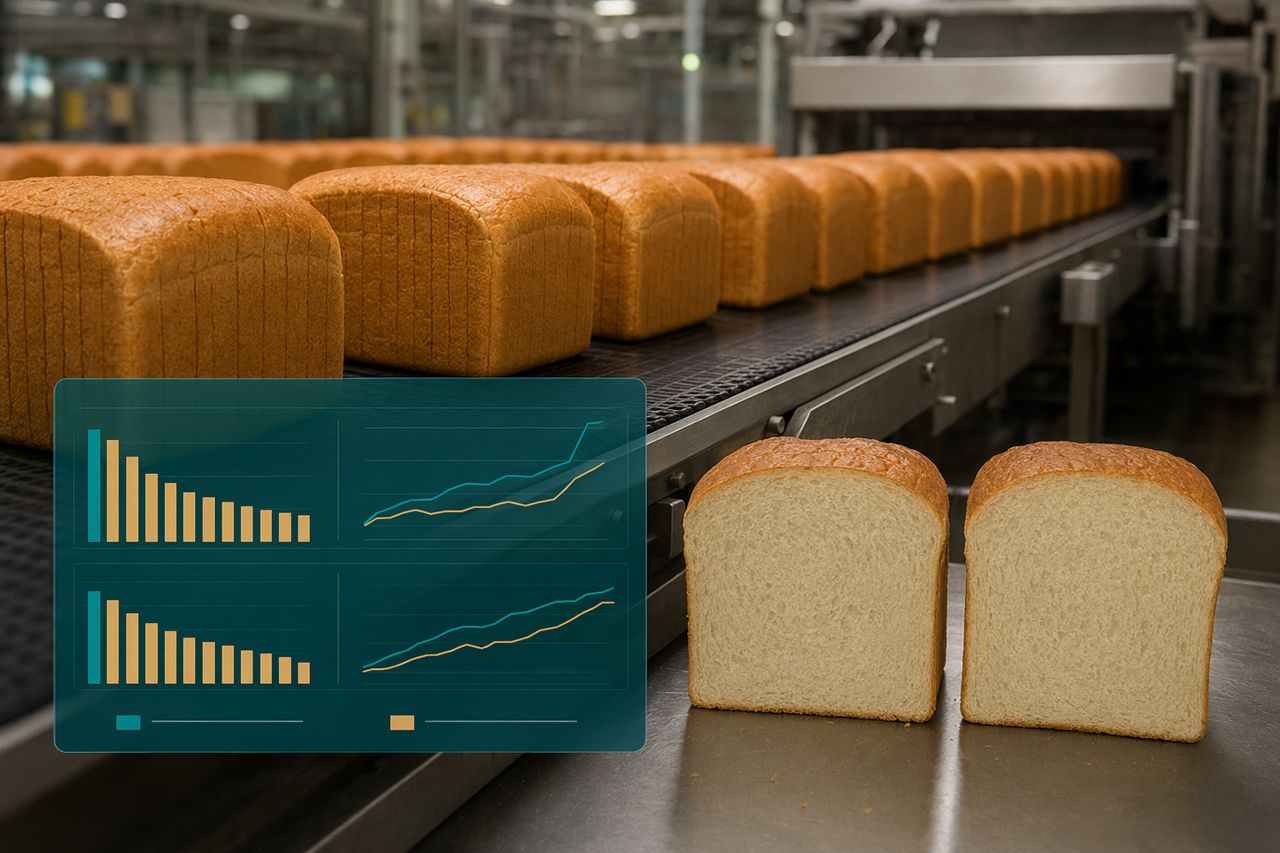
Enzyme systems may appear expensive on a kilogram basis, but the relevant commercial metric is cost-in-use against delivered bread performance. A cleaner-label improver can create value if it helps protect loaf volume, reduce waste, improve softness retention, or enable a label claim that supports retail acceptance.
The right comparison is not ingredient price alone. It is the total effect on batch consistency, rejected product, production flexibility, and finished goods quality.
Where clean-label enzyme improvers work well
Clean-label enzyme strategies are especially relevant for:
- Industrial pan bread
- Sandwich bread
- Hamburger buns and hot dog rolls
- Toast bread
- Soft rolls
- Part-baked and par-baked bread systems
- Frozen dough or chilled dough formats where process conditions are well controlled
- Private-label bakery programs with retailer ingredient restrictions
They are less straightforward when the process is highly variable, flour quality is uncontrolled, or the product depends on a specific emulsifier-driven texture that cannot be replicated through enzyme action alone.
How premix manufacturers can de-risk reformulation
Start with the current benchmark
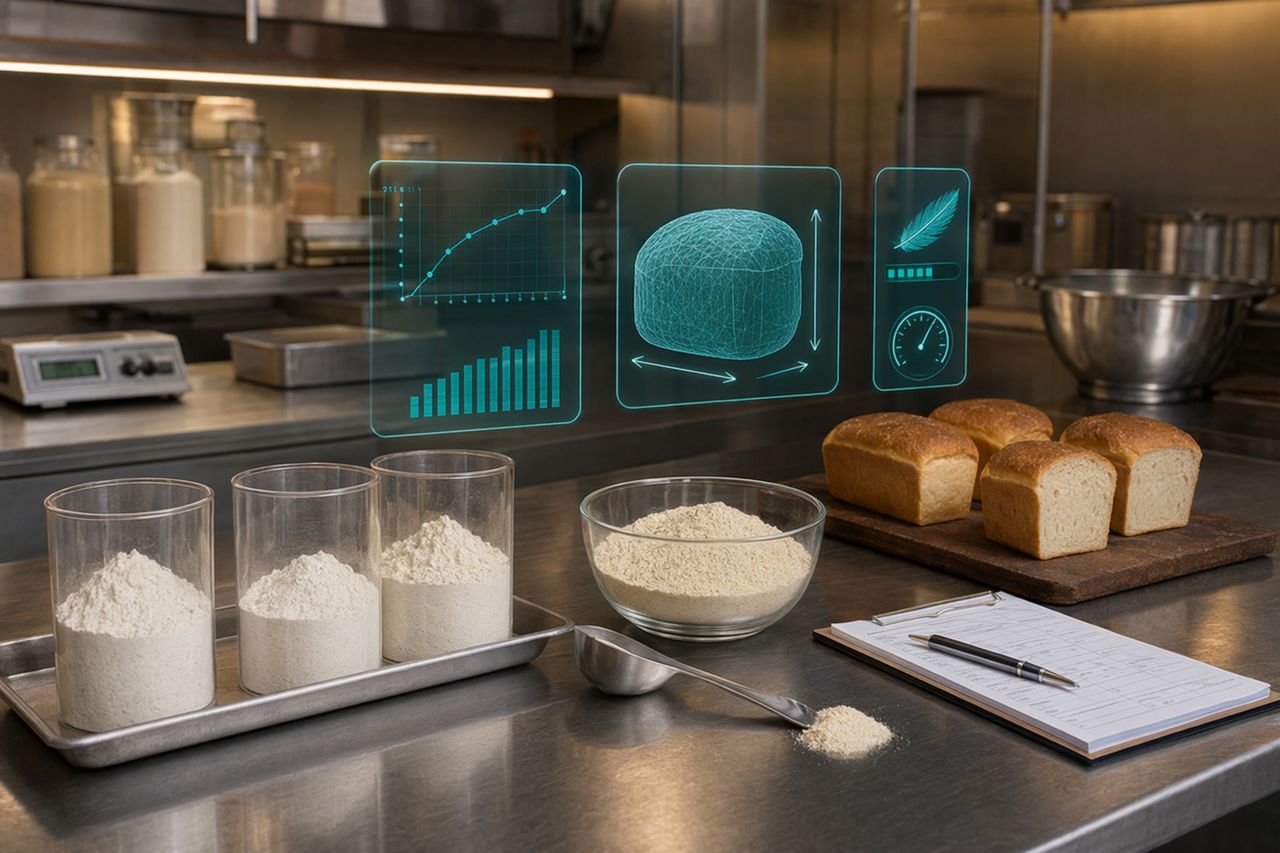
Do not begin with a clean sheet. Compare against the bakery’s current improver under the same process conditions. Measure the bread attributes that matter commercially: dough feel, line tolerance, proof stability, loaf volume, crumb grain, softness over time, slicing behavior, and reject rate.
Build a response map, not a single trial
A single successful bake does not prove robustness. Test across flour lots, mixing energy, fermentation time, and bake conditions. The goal is to identify the formulation window where performance remains stable.
Design for manufacturing reality
A clean-label improver may look good in a lab blend but fail in production if it segregates, bridges, cakes, or creates dust problems. Premix manufacturability should be part of the formulation brief from the start.
Keep the claim language disciplined
Ingredient declaration and processing aid status depend on product, market, and regulatory interpretation. Technical teams should align with regulatory and customer quality teams before positioning any enzyme-enabled improver as clean label.
Practical formulation checklist
For a cleaner-label bread improver program, ask these questions before selecting the enzyme system:
- Which ingredients are under label pressure, and which must remain?
- What bread formats and process lines will use the premix?
- What flour variation must the improver tolerate?
- Is the target improved volume, softness, dough strength, machinability, or emulsifier reduction?
- What carrier and blending strategy will prevent segregation?
- What warehouse and shelf-life conditions must the premix withstand?
- How will the customer validate success: bake score, waste reduction, shelf life, or production stability?
- What cost-in-use target is commercially acceptable?
The DoughVector view
Clean-label bread improvers are not about removing ingredients at any cost. They are about engineering the simplest ingredient system that still performs in a real bakery. Enzymes can be powerful tools in that system, especially when formulated around flour variability, process tolerance, and premix handling.
For bakery premix manufacturers, the opportunity is to supply more than a cleaner label. The opportunity is to supply confidence: a premix that blends evenly, doses reliably, performs across flour lots, and helps industrial bakeries protect finished bread quality.
Request a quote
Need an enzyme system for a clean-label bread improver, emulsifier-reduction project, or bulk premix program? Share your target bread format, process conditions, and packaging requirements through the on-site quote form.
Request a quote