Private Label Bread Improver Market: Opportunities for Regional Premix Manufacturers
Private label bread improvers are moving from commodity add-ons to strategic bakery ingredient programs. Regional bakery premix manufacturers are well positioned to capture that growth because they already understand local flour behavior, bakery process conditions, packaging formats, and distributor relationships.
For formulation managers and technical buyers, the opportunity is not simply to copy a national improver. It is to build a reliable, repeatable, enzyme-supported premix platform that helps bakeries manage dough tolerance, fermentation variation, volume, softness, and everyday production risk.
DoughVector supports manufacturers developing bulk bakery enzymes for premix manufacturers that want cleaner formulation control, stable powder handling, and private label systems built for commercial bakery use.
Why private label bread improvers are gaining momentum
Regional bakery networks are under pressure to deliver more consistent bread quality while managing flour variability, labor turnover, shorter production windows, and margin sensitivity. Private label improvers give distributors and ingredient brands a way to offer technical value without owning a full bakery R&D infrastructure.
Key market drivers include:
- Local flour variability: Bakeries need improvers tuned to regional wheat quality, seasonal shifts, and mill-to-mill differences.
- Distributor differentiation: Ingredient distributors want own-brand products that are harder to replace than standard traded commodities.
- Simplified bakery purchasing: Bakeries prefer compact, application-specific solutions instead of multiple small technical ingredients.
- Operational consistency: Bread plants need dough systems that tolerate mixing, proofing, and handling variation.
- Margin control: Private label programs can create higher-value product lines with better pricing structure than generic premix resale.
Where regional premix manufacturers can win
Large ingredient groups often focus on broad market coverage. Regional premix manufacturers can compete by being faster, more application-specific, and closer to bakery production reality.
1. Build around local bread formats
Private label improvers should be designed around actual bakery SKUs, not abstract formulation categories. A white pan bread improver, flatbread improver, sweet dough improver, frozen dough improver, and artisan-style tolerance improver each require different formulation priorities.
Commercial buyers respond well when the offer is framed around bakery outcomes:
- Better dough machinability
- Improved gas retention
- More stable loaf volume
- Softer crumb over shelf life
- Reduced proofing sensitivity
- Improved tolerance during line stoppages
- Cleaner performance across flour lots
This is where enzyme-led formulation can create value without increasing formulation complexity for the bakery.
2. Treat enzyme selection as a premix design decision
In a private label bread improver, enzymes are not isolated technical ingredients. They interact with flour strength, oxidizing or reducing systems, emulsifiers, hydrocolloids, mineral salts, carrier selection, and powder flow behavior.
A premix manufacturer should evaluate enzyme systems through practical production questions:
- Will the improver disperse evenly during bakery mixing?
- Does the blend maintain performance after transport and storage?
- Is the dosage window forgiving for bakery operators?
- Does the formulation support target dough strength without over-tightening?
- Can it absorb normal flour quality swings without frequent reformulation?
- Does the finished premix run cleanly through packing and dosing equipment?
DoughVector works with B2B buyers on enzyme solutions that fit premix realities: dry blending, carrier compatibility, private label scale-up, and plant-floor repeatability.
Commercial positioning: avoid selling a generic improver
Private label bread improvers perform better commercially when the brand promise is specific. Instead of launching one generic “bread improver,” regional manufacturers can create a focused tier architecture.
Practical private label portfolio structure
| Product tier |
Buyer promise |
Typical use case |
| Standard dough improver |
Everyday tolerance and volume support |
Regional wholesale bread and buns |
| Softness improver |
Crumb softness and freshness perception |
Packaged bread and sweet bakery |
| High-tolerance improver |
More forgiving dough handling |
Semi-automated and labor-variable bakeries |
| Frozen dough improver |
Structure support through freezing and thawing |
Par-baked, frozen, or delayed bake systems |
| Clean-label-leaning improver |
Shorter declaration strategy where feasible |
Retail bakery and premium private label |
This structure helps distributors sell by application, not by ingredient list. It also gives packaging designers and ingredient marketers a clearer framework for naming, claims language, and sales literature.
What consultants and distributors should evaluate before launch
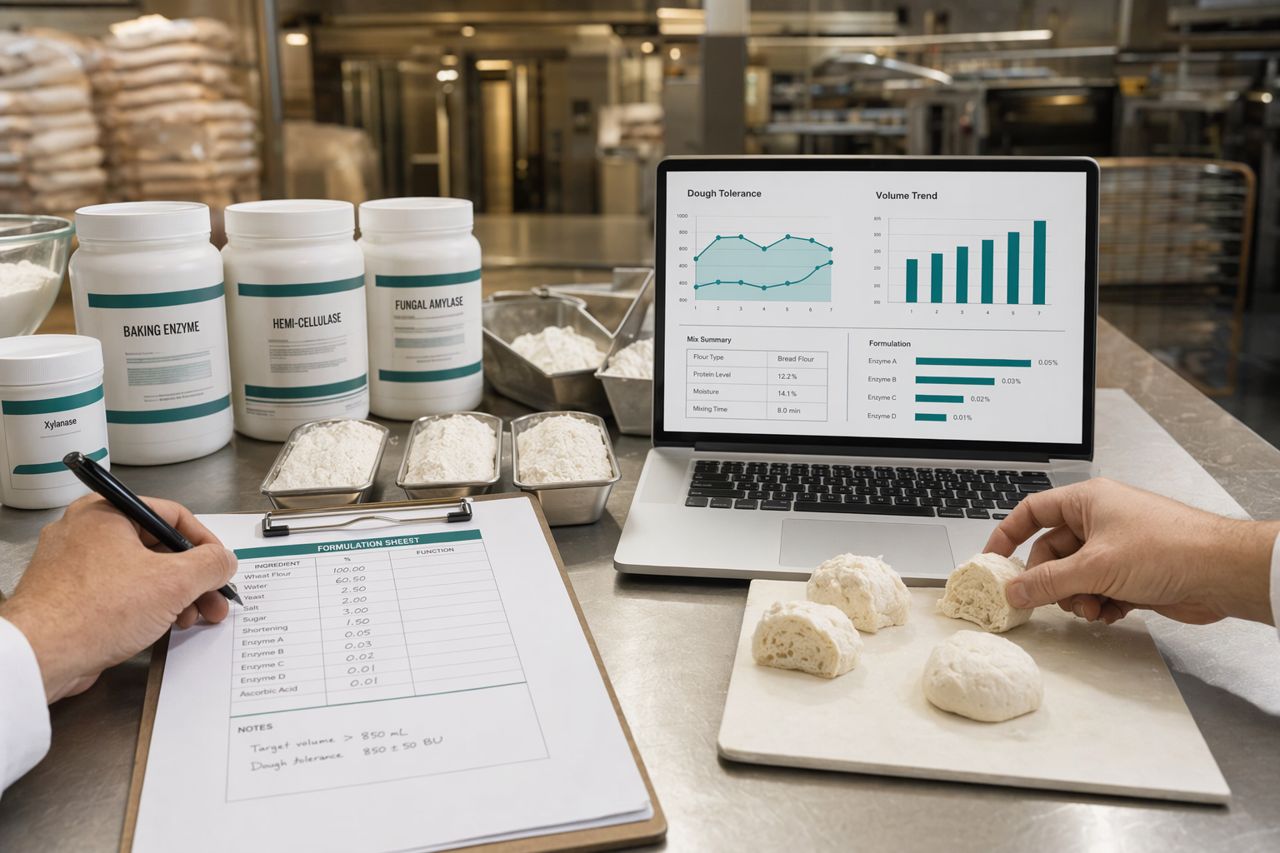
A private label improver program should be validated beyond bench baking. The most common launch failures come from weak translation between lab samples, premix production, distributor storage, and bakery use.
Before commercial launch, assess:
- Flour mapping: Identify the flour ranges the improver must tolerate.
- Bakery process fit: Confirm mixing, fermentation, proofing, and baking conditions.
- Blend uniformity: Validate that micro-ingredients remain evenly distributed at production scale.
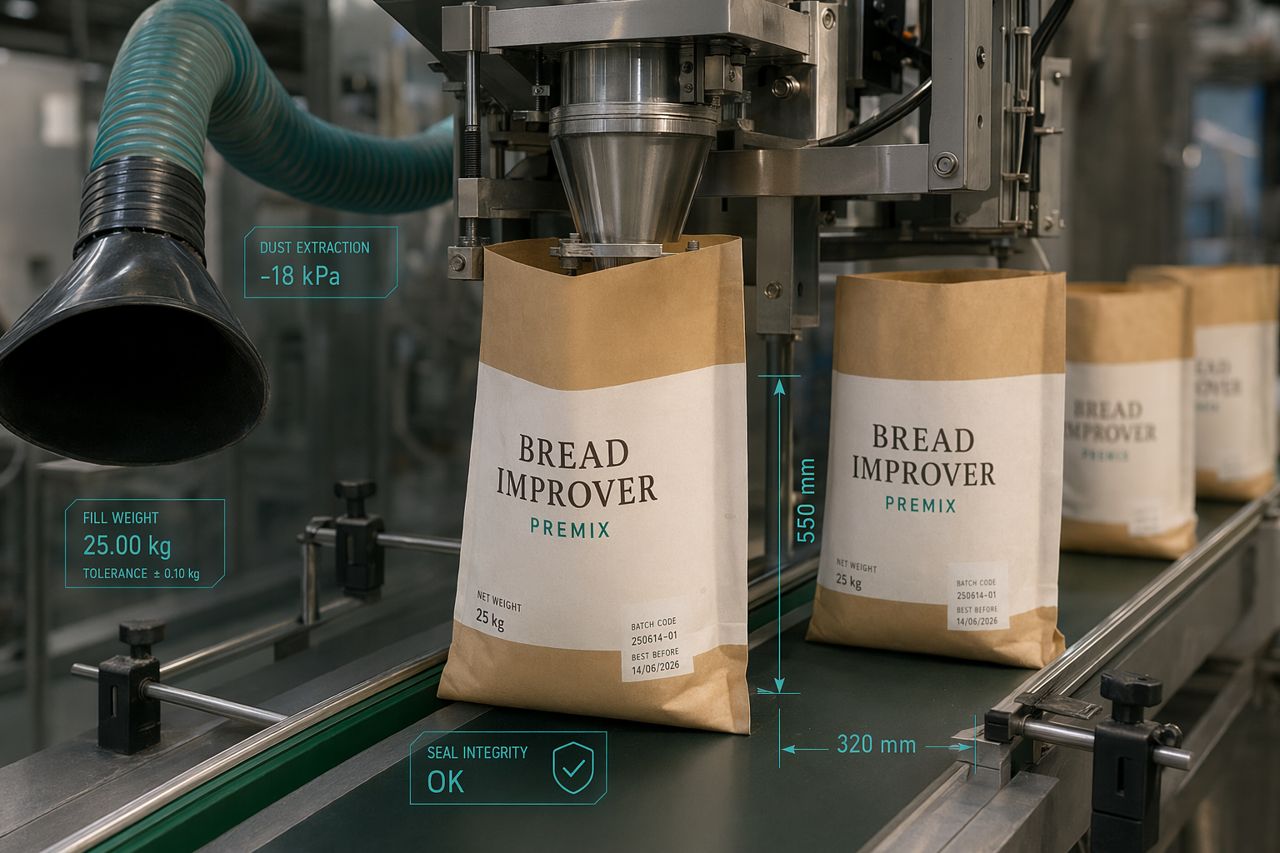
- Powder flow: Check discharge, packing, dust control, and segregation risk.
- Label strategy: Align functional value with market-appropriate declaration requirements.
- Shelf-life expectation: Define how performance should hold during warehouse and distributor handling.
- Field troubleshooting plan: Prepare adjustment guidance for flour changes, seasonal humidity, and process drift.
A strong private label program gives sales teams confidence because the product behaves predictably under real bakery conditions.
Packaging and marketing: make the technical value visible
Private label bread improver packaging should communicate trust quickly. Buyers need to understand what the product does, where it fits, and why it is safe to standardize across bakery sites.
Effective B2B packaging and collateral usually include:
- Application name, not just ingredient category
- Clear bakery outcome statements
- Suggested usage range expressed in practical formulation language
- Storage and handling guidance
- Batch coding and traceability fields
- Distributor-ready product hierarchy
- Technical sheet aligned with sales claims
For regional brands, the strongest message is often simple: consistent bread performance using a premix adapted to local flour and production conditions.
Enzyme-supported value in private label bread improvers
Enzyme systems can help premix manufacturers build improvers that address multiple bakery pain points at once. Depending on the product target, enzymes may support dough handling, gas retention, crumb structure, softness, crust color, or production tolerance.
For B2B buyers, the value is operational:
- Fewer flour-related quality swings
- More consistent loaf height and crumb structure
- Better tolerance during mixing and proofing variation
- Reduced need for last-minute bakery adjustments
- More repeatable performance across premix batches
- Stronger technical story for distributors and private label sales teams
The goal is not to add complexity. The goal is to make the improver easier to manufacture, easier to sell, and easier for bakeries to trust.
Manufacturing considerations for premix plants
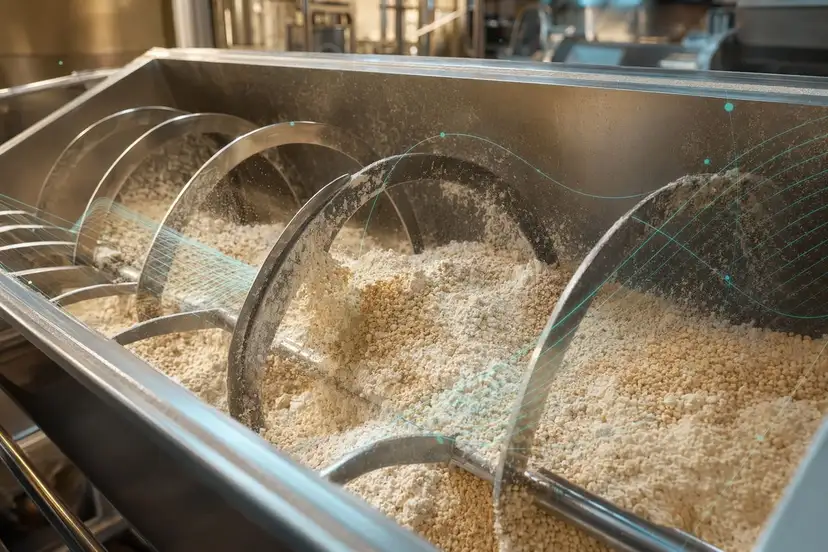
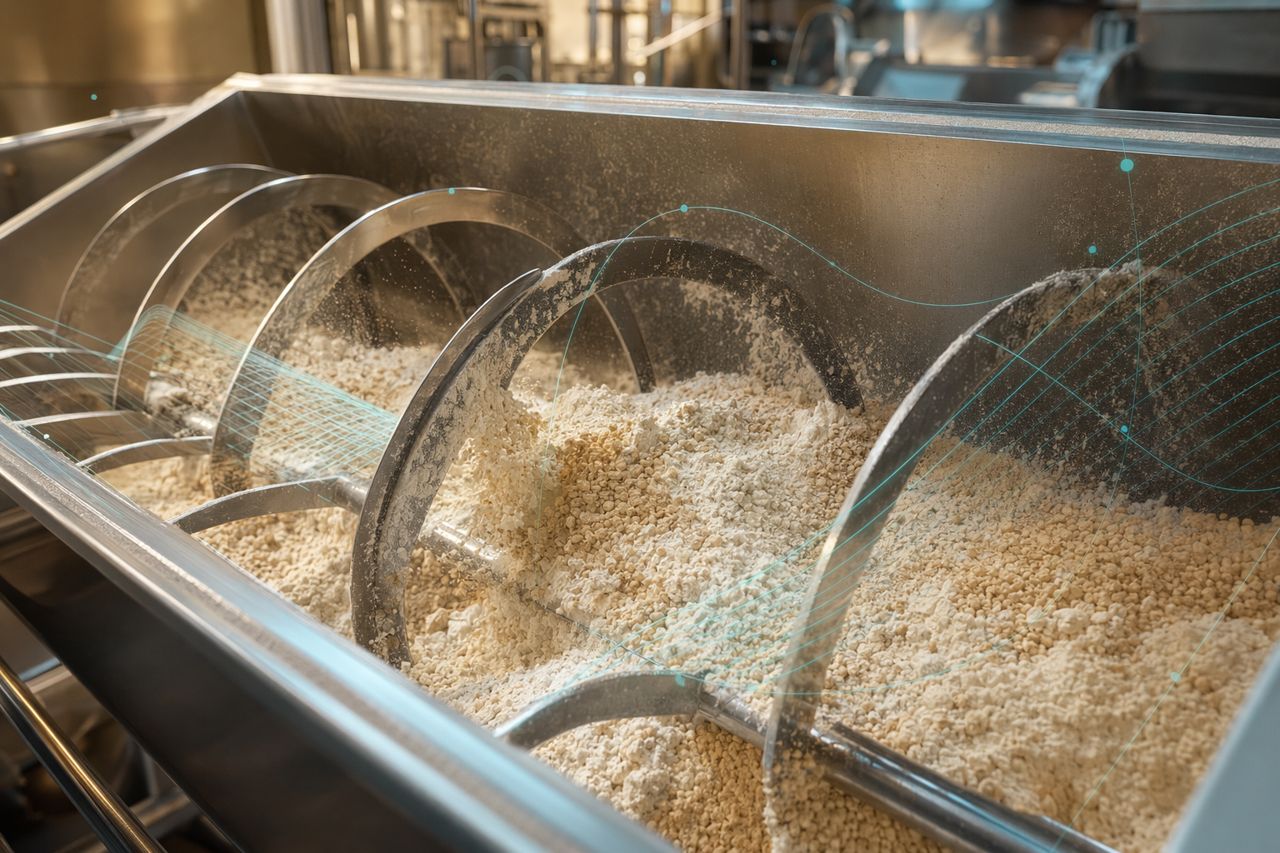
Private label improvers often contain low-inclusion functional ingredients. That makes premix process discipline critical.
Important plant-floor considerations include:
- Carrier choice for even dispersion
- Addition sequence in ribbon or paddle blending
- Mixing time that supports uniformity without overworking the blend
- Dust control and operator handling comfort
- Moisture protection during storage and packing
- Packaging barrier selection for target shelf life
- Batch records that support private label quality expectations
DoughVector’s formulation support is built around these practical constraints. The enzyme system must fit the plant, not just the concept sheet.
Route to market for regional premix manufacturers
A focused launch plan can reduce commercial risk. Start with one or two bread formats where your sales network already has traction. Validate with friendly bakery accounts, document the performance, then expand into adjacent formats.
A useful sequence:
- Select the target bread application and customer segment.
- Define the technical performance promise.
- Build the enzyme-supported premix prototype.
- Run internal blend and bake validation.
- Test with selected bakeries under normal production conditions.
- Refine dosage guidance, packaging, and sales claims.
- Launch through distributor or direct B2B channels.
- Use field feedback to build the next product tier.
This approach gives private label programs a stronger technical foundation and a clearer commercial story.
The opportunity ahead
The private label bread improver market rewards manufacturers that can combine formulation control with fast regional execution. Consultants, distributors, packaging designers, and bakery ingredient marketers all have a role in shaping the offer, but the product must start with dependable premix performance.
For regional bakery premix manufacturers, enzyme-supported improvers can become more than line extensions. They can become a differentiated platform for local bakery performance, distributor loyalty, and repeatable B2B growth.
Planning a private label bread improver line?
DoughVector can support enzyme system selection, premix compatibility, and formulation direction for private label bakery improvers designed for commercial production.
Request a quote for bulk bakery enzymes and technical fit guidance for your premix program.