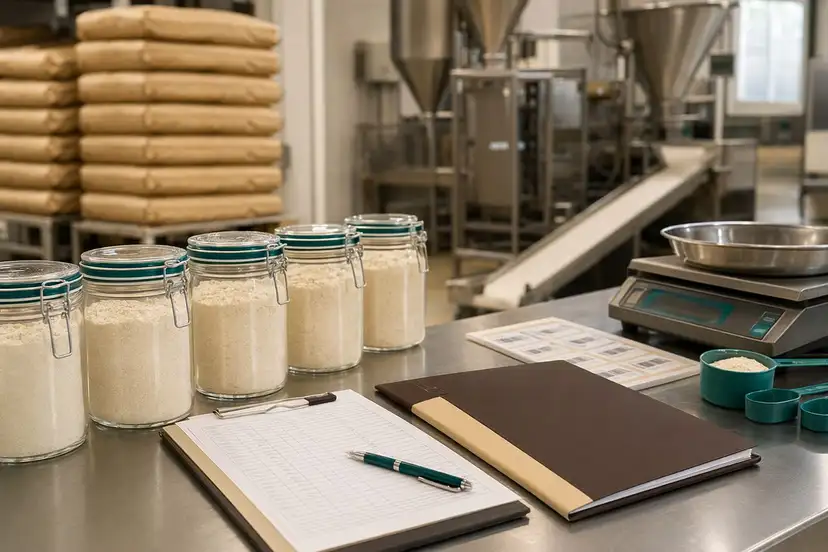
Quality Documents Importers Expect from Premix Suppliers
A practical guide for bakery premix manufacturers preparing quality, compliance, and traceability documents for ingredient importers and technical buyers.
Request pricing A practical guide for bakery premix manufacturers preparing quality, compliance, and traceability documents for ingredient importers and technical buyers.
Request pricingFor bakery premix manufacturers, export readiness is not only a formulation question. It is a documentation system. Importers need confidence that every pallet, bag, and micro-ingredient has a clear identity, controlled specification, and traceable release record before it enters a market, warehouse, or customer plant.
This is especially important when the premix includes functional ingredients such as oxidizing systems, emulsifiers, improvers, or bulk bakery enzymes for premix manufacturers. These components may be used at low inclusion rates, but they carry high technical importance. A missing document can delay customs clearance. A vague specification can slow customer approval. A weak traceability file can turn a manageable question into a shipment hold.
Below is a procurement-facing checklist of the quality documents ingredient importers commonly expect from premix suppliers, with practical notes for formulation managers, export teams, and technical buyers.
Importers are managing three risks at once:
For bakery premix suppliers, the best documentation does more than satisfy a file request. It reduces friction across procurement, technical approval, customs, warehousing, and customer onboarding.
A strong document pack helps importers:
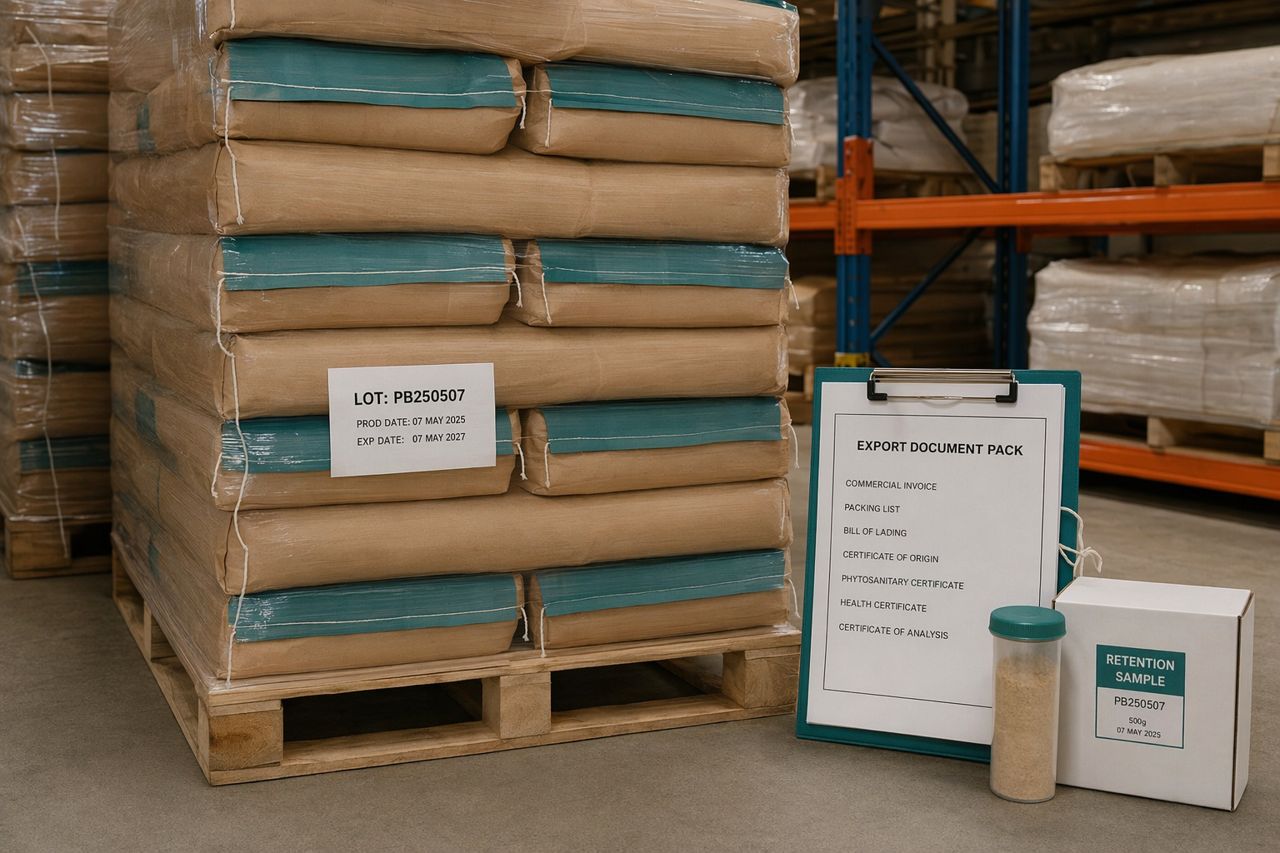
Most bakery ingredient importers expect a standard quality pack before placing the first commercial order. Requirements vary by country and product type, but the following documents form the baseline.
The product specification sheet is often the first technical document reviewed by procurement and formulation teams. It should be clear enough for commercial screening and detailed enough for technical approval.
A strong specification usually includes:
For enzyme-containing bakery premixes, the specification should also describe functional purpose in practical terms, such as dough handling support, crumb softness, tolerance improvement, volume support, or anti-staling contribution. Keep the language operational and customer-facing. Importers want to understand what the ingredient is designed to do in a bakery system.
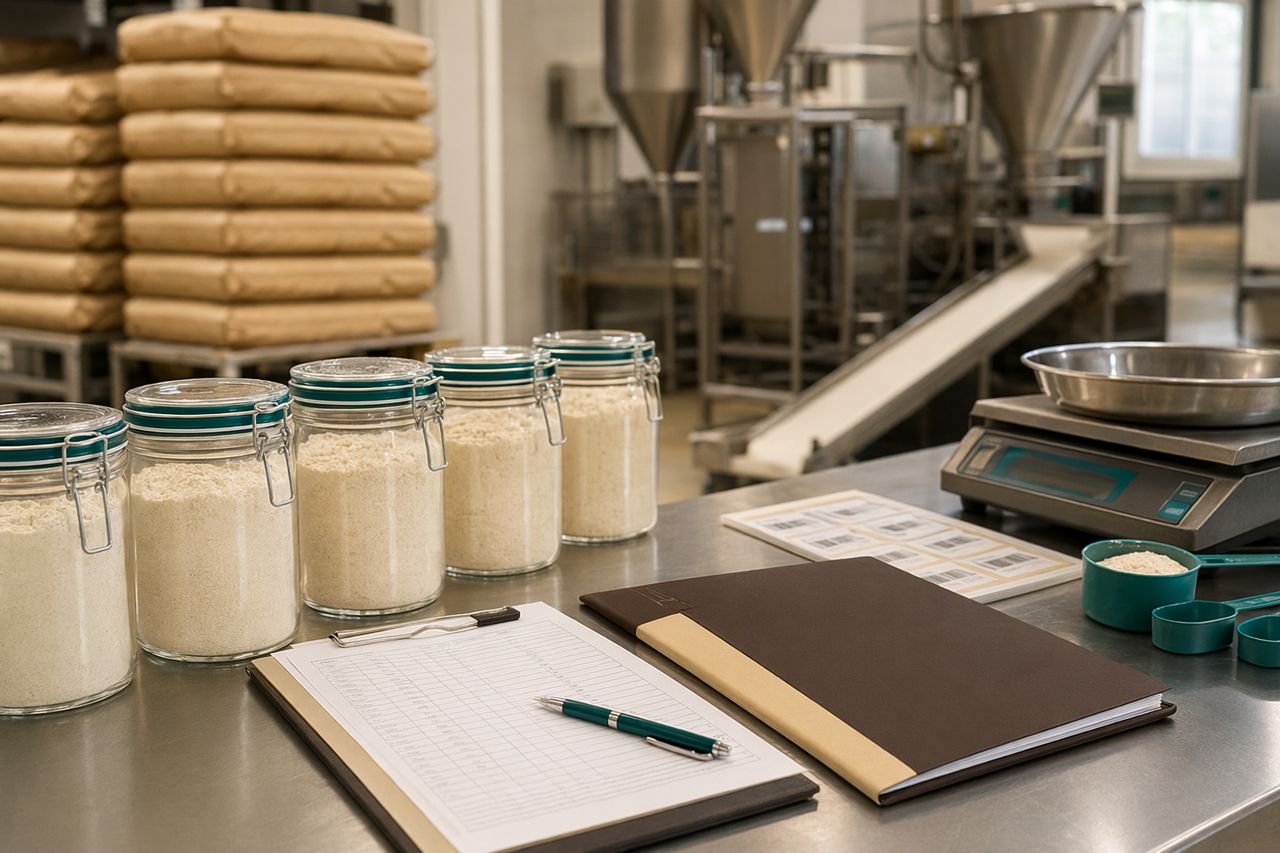
The certificate of analysis, or CoA, connects the shipped batch to its release status. It should match the lot number on the label, invoice, packing list, and internal batch record.
Typical CoA content includes:
The CoA should be issued per batch, not as a generic document. Importers often reject generic quality statements when they need shipment-specific release evidence.
Importers frequently request current third-party food safety certification. The expected scheme depends on the market and customer base, but common examples include GFSI-recognized systems or equivalent audited food safety management programs.
The certificate file should be current, readable, and complete. Include:
A frequent mistake is sending a certificate where the scope does not clearly cover premix blending, dry ingredient handling, or the relevant product category. If the certificate scope is vague, importers may ask for audit summaries, site declarations, or additional clarification.
Bakery premixes often contain or contact common allergens such as wheat, milk derivatives, soy derivatives, egg ingredients, sesame, or nuts depending on the product line and facility layout.
A practical allergen declaration should identify:
For importers, allergen clarity is not optional. They may use your declaration to build local-language labels, customer specifications, and risk assessments for regional bakeries.
Depending on the destination market, importers may request specific declarations or certificates. These may include:
The most useful declarations are product-specific and dated. Generic company statements are less persuasive when importers need to submit files to retail, foodservice, or industrial bakery customers.
Many bakery premixes are food ingredients and may not require the same handling classification as industrial chemicals. However, importers may still request a safety data sheet for worker handling, warehouse intake, or local compliance files.
If supplied, the safety data sheet should reflect the actual product form and hazards of the blend. Avoid sending an unrelated raw material document for a finished premix. Warehouse teams need practical guidance on dust control, personal protective equipment, spill cleanup, storage, and transport handling.
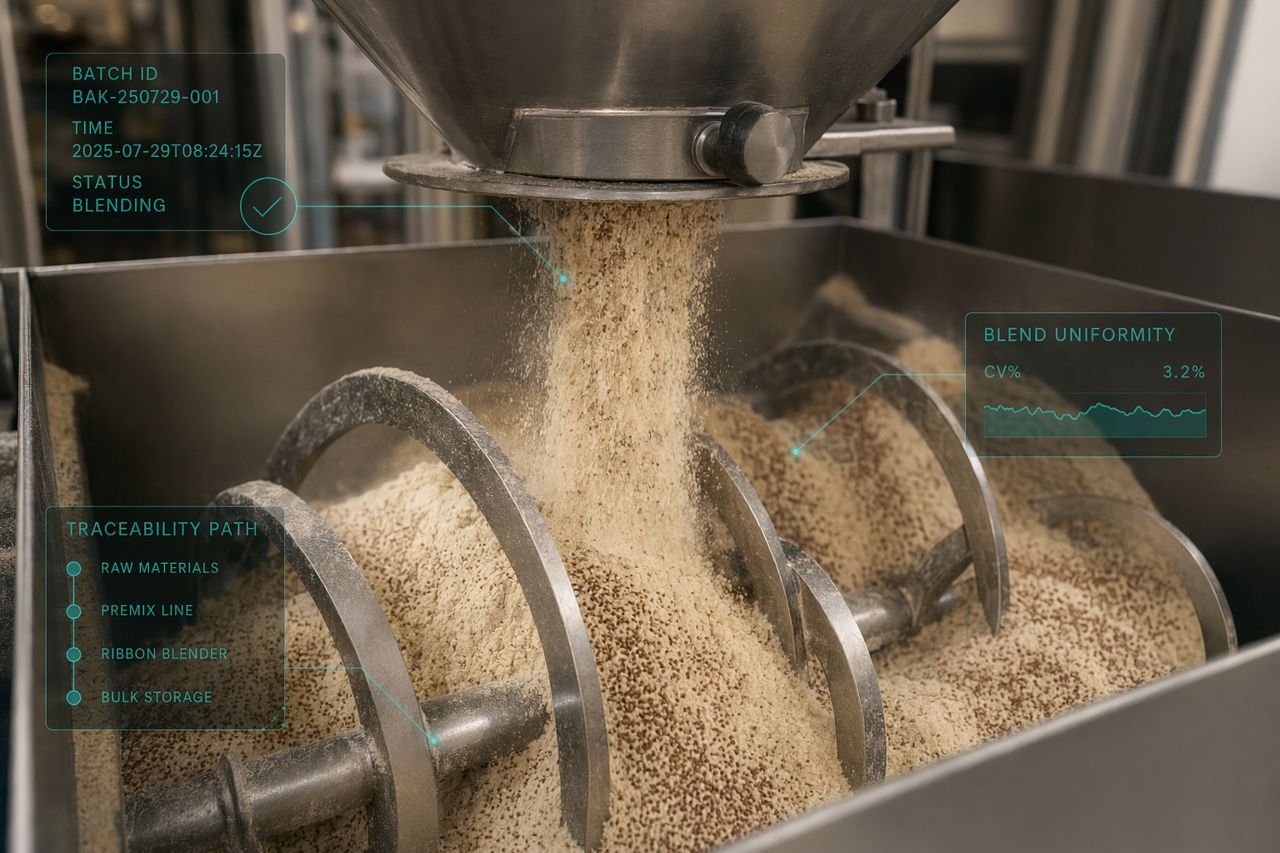
Traceability is a major confidence signal for importers. A traceability statement should explain how raw material lots, production batches, packing records, and shipment references are connected.
Strong traceability documentation typically covers:
For premix manufacturers, the key message is control. Importers want to know that a question about one pallet can be narrowed to the correct production run without disrupting unrelated shipments.
Bakery premixes are sensitive to humidity, heat, and distribution conditions. Enzyme-containing systems and other functional blends need controlled storage guidance to protect performance over time.
A shelf-life statement should include:
Importers often store product through multiple climate zones. Clear storage guidance reduces the risk of caking, moisture pickup, weakened functionality, and customer complaints.
Before commercial import, many buyers need label content for local review. The label should align with the specification and commercial documents.
Typical label fields include:
For private-label premix programs, agree in writing who controls artwork, translations, regulatory review, and version updates.
Beyond the standard quality pack, importers often appreciate documents that help their technical and sales teams explain the premix to downstream bakery customers.
An application guide translates the specification into bakery floor use. It should include:
For enzyme-based improver systems, avoid vague claims. Buyers respond better to practical outcomes such as improved dough tolerance, more consistent volume, reduced handling variation, or softer crumb over shelf life.
A short stability note can prevent repeated buyer questions. It should explain how the premix is protected during normal warehousing and shipment.
Useful details include:
This document is especially helpful for importers serving hot or humid markets.
Importers do not want silent changes. A change control statement should define when the supplier will notify buyers before altering:
For strategic accounts, agree on notification timing in the supply contract or technical agreement.
The most common delays are not caused by unusual requests. They are caused by inconsistency between documents.
Watch for these gaps:
A simple document control table can prevent most of these issues before the shipment leaves the plant.
A practical importer file should be easy to review, version-controlled, and batch-linked.
Recommended structure:
Use consistent file naming. Example: product code, document type, version, date. Importers may handle hundreds of SKUs, and clean file names save real approval time.
When a bakery premix includes enzyme technology, importers usually want clarity on identity, functionality, storage, and regulatory suitability. The goal is not to overload the buyer with internal development data. The goal is to provide enough controlled information for safe approval and reliable bakery use.
For DoughVector customers, the documentation approach is built around formulation practicality:
This helps premix manufacturers integrate enzyme systems into dry blends without creating unnecessary documentation friction for import partners.
Before sending your next quote or sample shipment, confirm that the following are ready:
If these documents are prepared before the commercial discussion, procurement moves faster and technical teams ask better questions.
Importers are not only buying a premix. They are buying confidence in how that premix is specified, released, labeled, stored, and supported. The more controlled your quality document pack is, the easier it becomes for buyers to approve your product and keep it moving through their market.
DoughVector supports bakery premix manufacturers with functional enzyme systems designed for batch consistency, dry-blend handling, and clear technical documentation.
Planning a premix line that requires importer-ready enzyme documentation? Request a quote through the on-site form and tell us your target application, packaging format, and destination market.
Tell us your application and volume — we reply with pricing and lead time.