Flour Variability & Bread Improver Formulation | DoughVector
A practical guide for premix plants on monitoring flour variation and adjusting bread improver systems, including bulk bakery enzymes for premix manufacturers.
Request pricing A practical guide for premix plants on monitoring flour variation and adjusting bread improver systems, including bulk bakery enzymes for premix manufacturers.
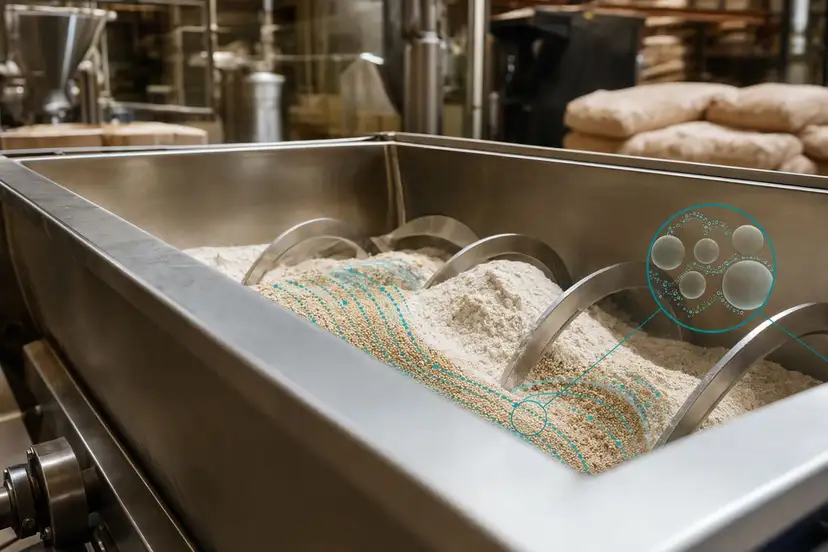
Request pricingFor bakery premix manufacturers, flour is rarely a fixed input. Crop year, mill stream selection, extraction level, supplier changes, and storage conditions can all shift how flour hydrates, develops, ferments, and tolerates process stress.
The bakery usually sees the symptom: sticky dough, variable proof height, tight crumb, weak oven spring, or poor slicing strength. The premix plant sees the upstream challenge: how to design a bread improver that performs across realistic flour variation without overcorrecting the formula.
This is where formulation discipline matters. A robust improver system does not chase every flour change with a new recipe. It defines which flour signals matter, links them to dough behavior, and builds controlled adjustment windows for enzymes, oxidants, emulsifiers, reducing agents, and carriers.
For technical buyers sourcing bulk bakery enzymes for premix manufacturers, the practical question is not simply “which enzyme works?” It is “which enzyme system holds performance when flour quality moves?”
Protein level gives a useful first indication, but it does not fully predict dough strength. Two flours with similar protein can behave differently if gluten quality, wheat class, or milling history differs.
Premix teams should monitor:
Formulation implication: Stronger flours may tolerate systems that support extensibility and gas retention. Weaker flours may need more reinforcement, tighter oxidation balance, and careful enzyme selection to avoid dough slackening.
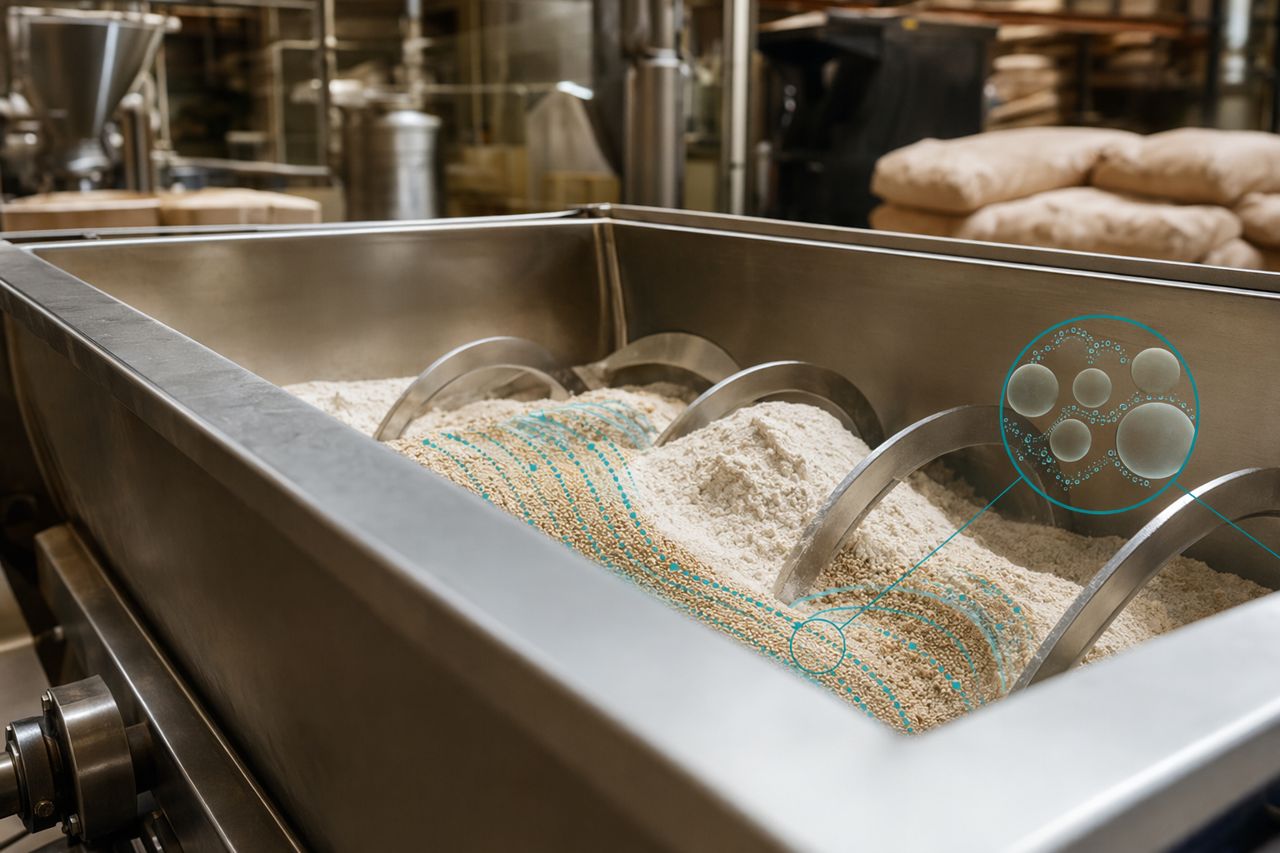
Damaged starch changes how much water flour takes up and how quickly it binds during mixing. It also influences fermentable sugar availability and dough stickiness.
When damaged starch rises, plants may see:
Formulation implication: Enzyme systems must support volume and crust color without creating excessive softness or gumminess. The improver should be evaluated at realistic water settings, not only at a fixed lab water addition.
Flour with elevated native amylase behavior can produce dough that ferments quickly, softens early, or bakes with a tacky crumb. Low native amylase behavior can produce slow fermentation, pale crust, and reduced volume.
Premix plants should track the trend rather than rely on a single certificate value. The key is how the flour behaves in a dough system under the customer’s process conditions.
Formulation implication: Alpha-amylase selection and inclusion range should be built around flour risk. A broad flour base may require a conservative system that protects crumb structure while improving fermentable sugar release.
Higher extraction flours and flours with more bran influence water absorption, gluten development, fermentation behavior, and crumb appearance. Fine bran particles can interfere with gluten continuity and reduce loaf volume.
Formulation implication: Xylanase and supporting enzyme systems can improve water distribution and dough machinability, but the formulation needs restraint. Too much correction can shift dough from tolerant to sticky, especially in high-speed lines.
Premix plants often focus on flour functionality, but flour flow also matters. Particle size distribution affects blending, dusting, carrier loading, segregation risk, and micro-ingredient dispersion.
Watch for:
Formulation implication: Enzyme performance starts with physical distribution. Carrier choice, preblend strategy, and blend validation are just as important as the biochemical function of the enzyme.
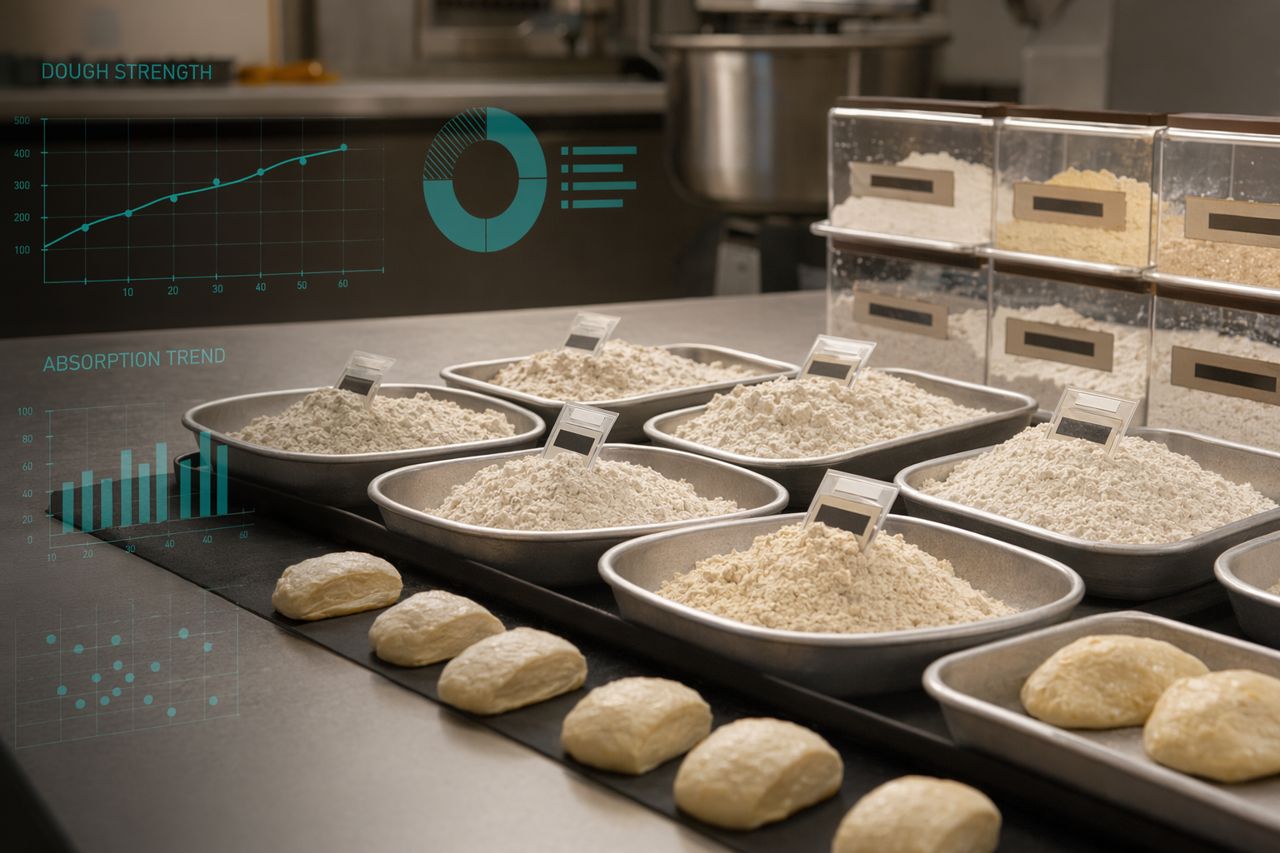
A useful monitoring system connects flour signals to formula decisions. The goal is not to build a new improver for every flour delivery. The goal is to define controlled formulation bands that keep dough behavior inside a usable processing window.
Premix formulation should be evaluated against measurable bakery outcomes:
These outcomes are easier for commercial bakeries to validate than isolated ingredient claims.
In bread improvers, enzymes rarely work in isolation. Amylases, xylanases, lipases, proteases, glucose oxidase, and other functional systems can interact with oxidants, emulsifiers, ascorbic acid, fats, sugars, and process time.
A robust enzyme package should be selected for:
The most common risk is not under-formulating. It is building an improver that looks excellent on one flour but becomes aggressive on another.
Signs of over-correction include:
Premix plants should define a “safe high-side” flour challenge and test the improver against it before release.
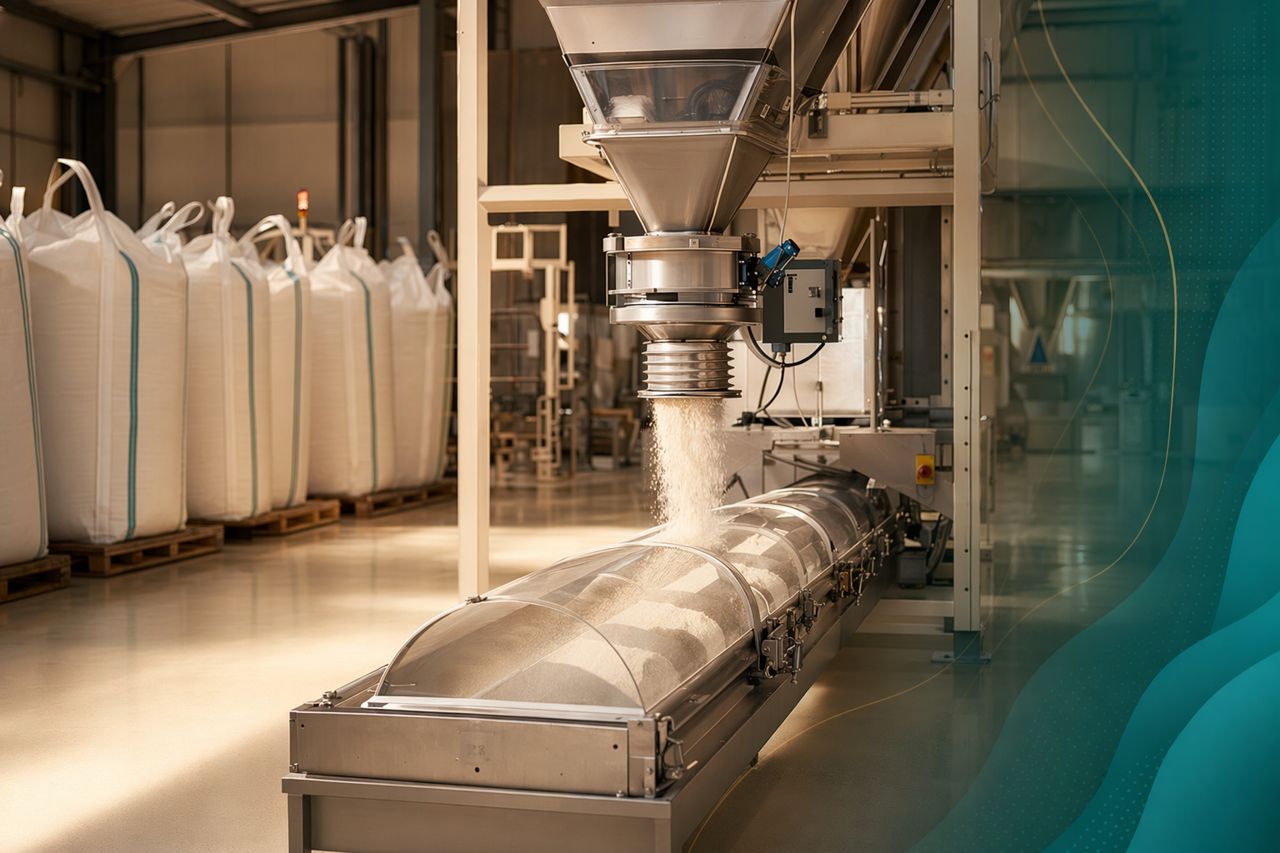
Even the best enzyme system can disappoint if dry blending is inconsistent. For bulk premix production, performance depends on formulation and manufacturing discipline.
Carriers influence flow, dust, dispersion, and enzyme protection. A good carrier system should match the target premix density and reduce segregation during transfer, packing, and transport.
Low-inclusion functional ingredients need controlled preblending before entering the main batch. This reduces hot spots and helps the finished premix deliver repeatable dough performance.
Charging order can affect micro-ingredient distribution. Dense minerals, fine powders, flour carriers, and enzyme preparations should be sequenced to support uniform dispersion without overmixing or dust loss.
Moisture exposure can change premix flow, caking behavior, and ingredient stability. Plants should monitor warehouse conditions, packaging integrity, and time-in-storage for each finished product family.
Finished premix should be checked through practical bakery trials, not only document review. A small dough test often catches dispersion or formulation issues earlier than customer complaints.
Premix manufacturers can keep the system lean by separating flour inputs into three decision tiers.
These are the signals that can block or redirect formulation use:
These signals may trigger a controlled formula adjustment:
These signals help improve future purchasing and formulation decisions:
When evaluating enzyme partners for bread improver manufacturing, technical buyers should ask questions that connect to plant reality:
The right answer should be practical, not theoretical. It should help formulation managers protect batch consistency while giving commercial teams a reliable technical story.
Flour variability cannot be eliminated, but it can be managed. For premix plants, the strongest bread improver systems start with clear flour monitoring, controlled enzyme selection, disciplined dry blending, and bakery trials tied to customer process conditions.
If your team is building or adjusting bread improver systems for variable flour supply, DoughVector can help review the target application and recommend bulk enzyme options for dry premix manufacturing.
Request a quote through the on-site form and include your product type, target bakery process, flour variation concerns, and preferred packaging format.
Tell us your application and volume — we reply with pricing and lead time.